17 May 2026
Beyond the Scoreboard: How Player Behavior Metrics from Mobile Titles Inform Console Hardware Upgrades

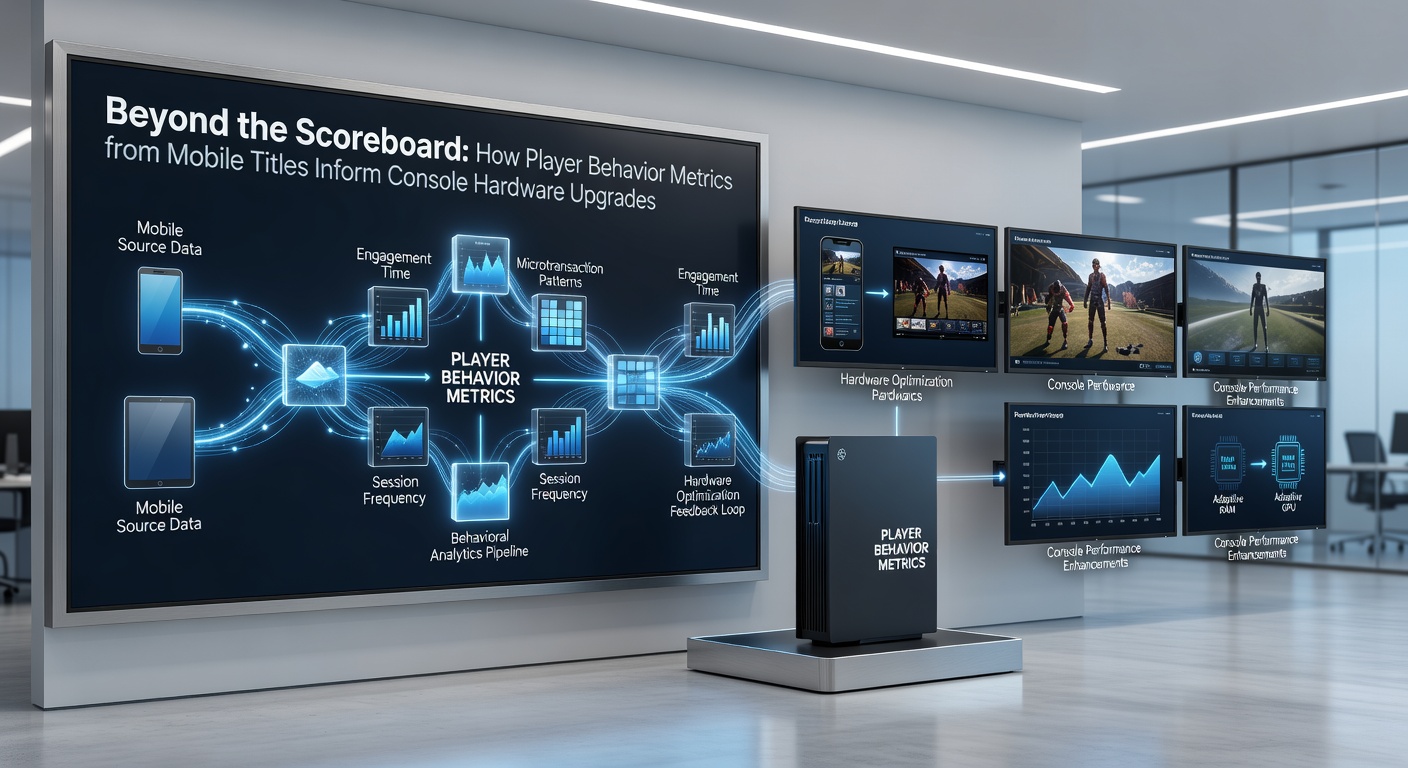
Player behavior metrics collected from mobile games have become a primary driver for console hardware development teams seeking to align new devices with real usage patterns. Data on session lengths, engagement peaks, and interaction styles from titles like Candy Crush Saga or Genshin Impact reveal preferences for quick starts, adaptive performance scaling, and seamless cross-device continuity that hardware engineers then translate into console specifications.
Researchers at major studios track metrics such as daily active users, average play sessions under fifteen minutes, and drop-off points during loading sequences. These figures show that mobile players favor instant access over long commitment periods, which pushes console designers to prioritize faster boot times and solid-state drive optimizations. Sony's PlayStation 5 and Microsoft's Xbox Series X already incorporate custom SSD architectures partly informed by such mobile-derived insights into fragmented play habits.
Core Metrics Shaping Hardware Priorities
Retention curves from mobile platforms indicate that players return more frequently when games support short bursts rather than marathon sessions. Hardware teams respond by refining power management systems and resume features so consoles can wake from sleep states in under two seconds. This approach mirrors mobile background processes that preserve game state without draining resources.
Monetization patterns provide another layer of guidance. In-app purchase data highlights moments when players make decisions quickly, often during high-intensity sequences. Console processors now integrate dedicated AI accelerators that maintain frame rates during these spikes while supporting dynamic resolution adjustments learned from mobile optimization techniques. Industry reports from the Entertainment Software Association detail how these performance tweaks reduce player churn across platforms.
Translation from Touch Interfaces to Physical Controls
Mobile touch data reveals precise gesture frequencies and pressure variations that developers use to refine analog stick sensitivity and trigger resistance on console controllers. Engineers study heatmaps of thumb movements across thousands of sessions to adjust ergonomic layouts, resulting in lighter weight designs and improved battery efficiency for wireless peripherals. One development team at a major Japanese manufacturer applied mobile swipe pattern analysis to create adaptive rumble motors that respond to in-game tension levels rather than generic vibration cues.
Cross-platform play statistics further connect mobile habits to console upgrades. Players who switch between phones and home systems demand consistent input latency below twenty milliseconds. This requirement has accelerated adoption of variable refresh rate displays and low-latency wireless protocols in 2026 hardware revisions, with prototypes demonstrated during industry showcases in May 2026.
Real-World Applications and Industry Examples
Valve's Steam Deck development incorporated mobile session analytics to determine optimal thermal throttling thresholds, allowing extended portable play without aggressive fan noise. Similarly, Nintendo's Switch successor discussions reference mobile free-to-play retention models when evaluating cartridge load speeds and cloud streaming integration. These choices emerge directly from aggregated data showing that hybrid device users abandon sessions when transitions between handheld and docked modes exceed five seconds.
Academic studies from institutions like the University of Southern California game innovation lab have quantified how mobile-derived metrics influence thermal design power limits on next-generation chips. Their findings indicate that consoles tuned to mobile play rhythms achieve higher sustained performance in multi-hour sessions because cooling systems activate based on predicted user behavior rather than worst-case assumptions.
But here's the thing: regional differences matter. Data from European markets shows stronger emphasis on accessibility features derived from mobile one-handed play modes, leading to modular controller attachments that console makers began prototyping in early 2026. Australian Interactive Games Association reports echo these trends, noting increased hardware investments in voice command integration after mobile voice analytics revealed rising usage among younger demographics.
Challenges in Data Integration
Privacy regulations complicate the flow of detailed metrics from mobile publishers to console hardware firms. Aggregated and anonymized datasets now form the standard input, yet gaps remain when cultural play preferences vary significantly between regions. Hardware teams address this by running controlled beta programs that combine console telemetry with mobile benchmarks to validate design decisions before mass production.
Turns out the most effective upgrades arise when teams avoid direct one-to-one mapping and instead identify underlying behavioral principles. For instance, mobile energy-saving modes during low-interaction periods translate into console idle-state optimizations that extend component lifespan while preserving instant-on capability.
Conclusion
Player behavior metrics from mobile titles continue to supply console hardware teams with actionable patterns around engagement duration, input preferences, and performance expectations. As development cycles align with data releases throughout 2026, observers note tighter integration between mobile analytics platforms and console engineering roadmaps. This ongoing exchange supports hardware that matches documented usage realities rather than assumed play styles, resulting in devices that accommodate fragmented schedules and varied interaction methods across global audiences.