No Man's Sky's Long Road from Launch Issues to Persistent Updates and Improved Metrics
Klara Long · Aug 23, 2026
No Man's Sky's Long Road from Launch Issues to Persistent Updates and Improved Metrics
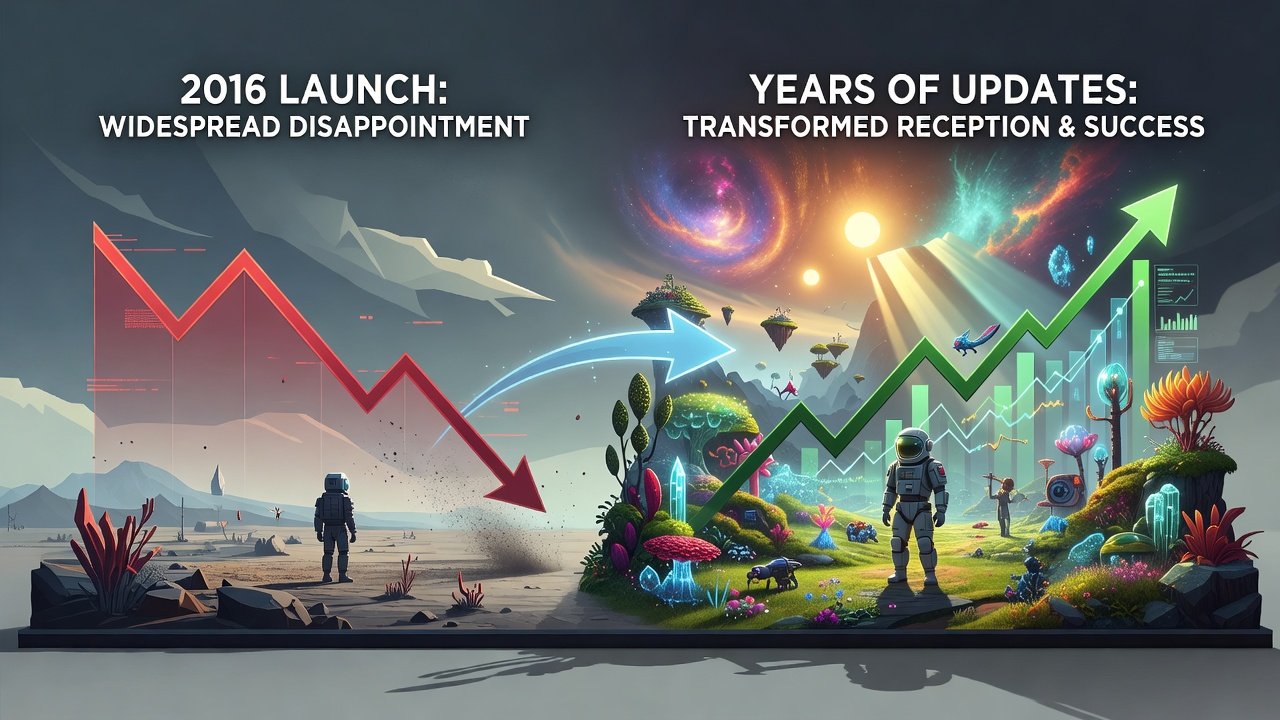
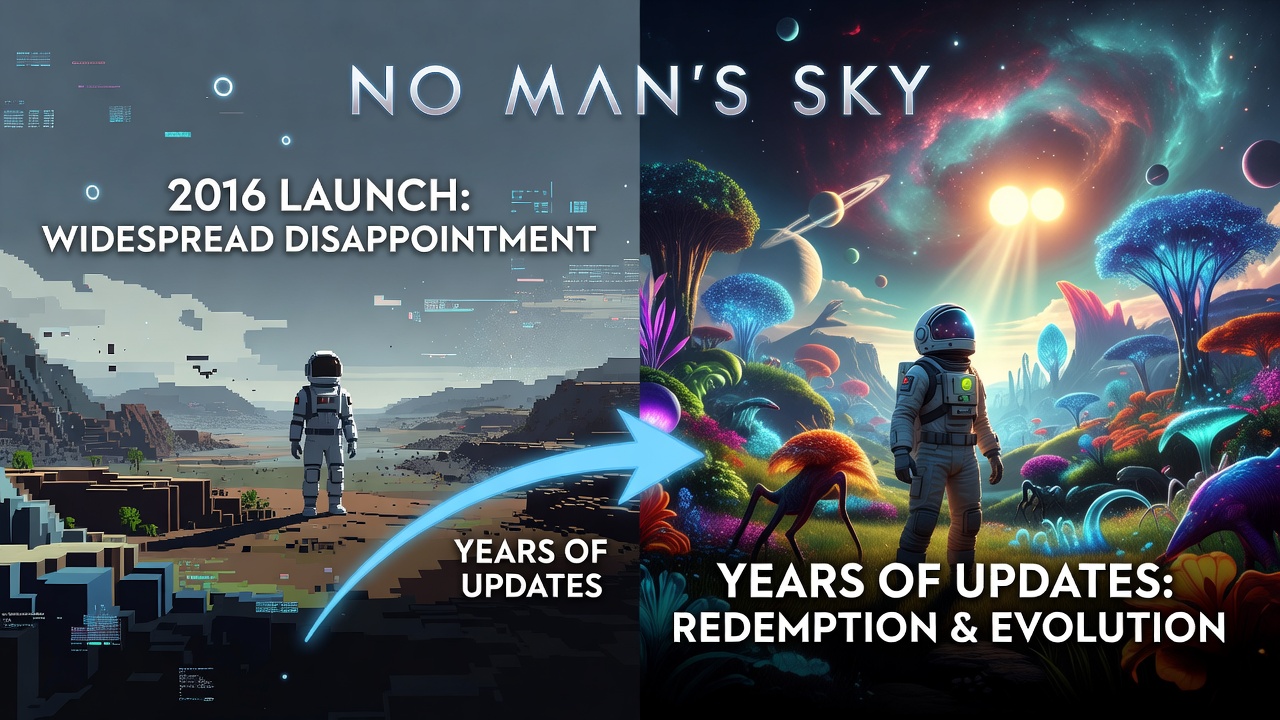
Released in August 2016 by Hello Games, No Man's Sky arrived with ambitious promises of procedural generation across 18 quintillion planets, multiplayer elements, and expansive exploration features that drew significant pre-launch attention from both media outlets and prospective players. Initial launch versions delivered a more limited experience than advertised, with missing features such as full multiplayer support and simplified planetary variety that led to widespread criticism in early reviews. Aggregates reflected this reception as Metacritic scores for the PlayStation 4 version settled at 71 while the PC edition reached 59, figures that captured the gap between marketing materials and delivered content at that time.
Data from sales trackers indicated strong opening weekend performance with over one million units moved in the first few days, yet concurrent player counts on Steam dropped sharply within weeks as feedback highlighted technical issues and content shortfalls. Developers responded by issuing multiple patches in the months following release, addressing bugs and introducing incremental content additions that began to rebuild the foundation for future expansions.
Key Update Milestones and Content Expansions
The 2017 Atlas Rises update introduced new story elements and improved progression systems, followed by the substantial 2018 Next release that added multiplayer functionality, base building, and visual overhauls across the board. Subsequent patches such as Beyond in 2019 expanded virtual reality support and refined core mechanics while the 2020 Origins update diversified planetary ecosystems with new biomes and weather systems. Observers tracking these changes noted how each major patch layered new systems onto the existing framework, gradually aligning closer to original scope claims while introducing fresh elements that extended play sessions.
By 2023 the Fractal and Echoes updates brought further refinements to expeditions and narrative threads, and into 2025 the Worlds Part I and Part II patches reworked terrain generation and introduced new planetary types that altered exploration loops for long-term players. August 2026 saw the deployment of another large-scale content drop focused on settlement management tools and cross-platform synchronization improvements, continuing the pattern of regular, substantive additions that have defined the post-launch period.
Review Aggregate Shifts Over Time
Steam user review percentages moved from an initial mixed rating shortly after launch to overwhelmingly positive by 2021 as cumulative updates accumulated, with the figure holding above 80 percent positive through 2026. OpenCritic scores followed a similar upward trajectory as professional outlets revisited the title with updated builds, pushing aggregate marks into the 70s and reflecting broader consensus on improved stability and feature completeness. Researchers examining review patterns across platforms documented how repeated content additions correlated with higher re-evaluation scores on both console and PC storefronts.
Those monitoring platform-specific data found that later console ports, including the Nintendo Switch version released in 2022, achieved stronger initial aggregate scores than the 2016 editions, illustrating how matured code bases benefited new audience segments. Academic analyses of player retention metrics, including one study referenced through the Entertainment Software Association reports, highlighted correlations between update cadence and sustained engagement levels across digital distribution services.
Sales Performance and Market Data Trends
Cumulative sales surpassed 15 million units by mid-2023 according to statements from the developer, with continued revenue from full-price digital copies and occasional promotional periods maintaining steady movement through 2026. Steam hardware surveys and player count trackers showed average concurrent users remaining in the thousands years after launch, a figure sustained by seasonal expeditions and cross-save functionality introduced in later patches. Industry reports from sources such as the Canadian International Game Developers Association compilations noted that live-service models relying on iterative updates often produced extended revenue tails compared to traditional single-release titles.
Regional sales breakdowns indicated stronger long-term performance in European and North American markets where digital storefront visibility remained high, while emerging markets contributed incremental growth tied to regional pricing adjustments and localized update promotions. Figures compiled by analytics firms revealed that the title maintained top-seller status in its category on multiple platforms during major update windows, underscoring the commercial viability of sustained development cycles.
Player Metrics and Platform Comparisons
Telemetry shared in developer updates documented increased average playtime per user following major content releases, with expedition events regularly driving temporary spikes in daily active accounts. Cross-platform play features added in 2020 further unified player pools, reducing fragmentation that had characterized earlier versions. Observers reviewing SteamDB and similar tracking services recorded stable ownership growth into 2026, even as newer procedural generation titles entered the market.
Conclusion
Review aggregates and sales data together chart a clear progression from the constrained 2016 launch state through successive expansions that addressed core complaints and introduced new systems. The pattern of ongoing support has produced measurable shifts in reception metrics while maintaining commercial momentum across multiple years and hardware generations. Continued updates through August 2026 demonstrate how iterative development can reshape long-term performance indicators for a single title.