Platform Divergence in Early Reviews: Mapping Niche Genre Loops and Sponsorship Shifts in Regional Esports Circuits
Olivia Wagner · Jun 26, 2026
Platform Divergence in Early Reviews: Mapping Niche Genre Loops and Sponsorship Shifts in Regional Esports Circuits
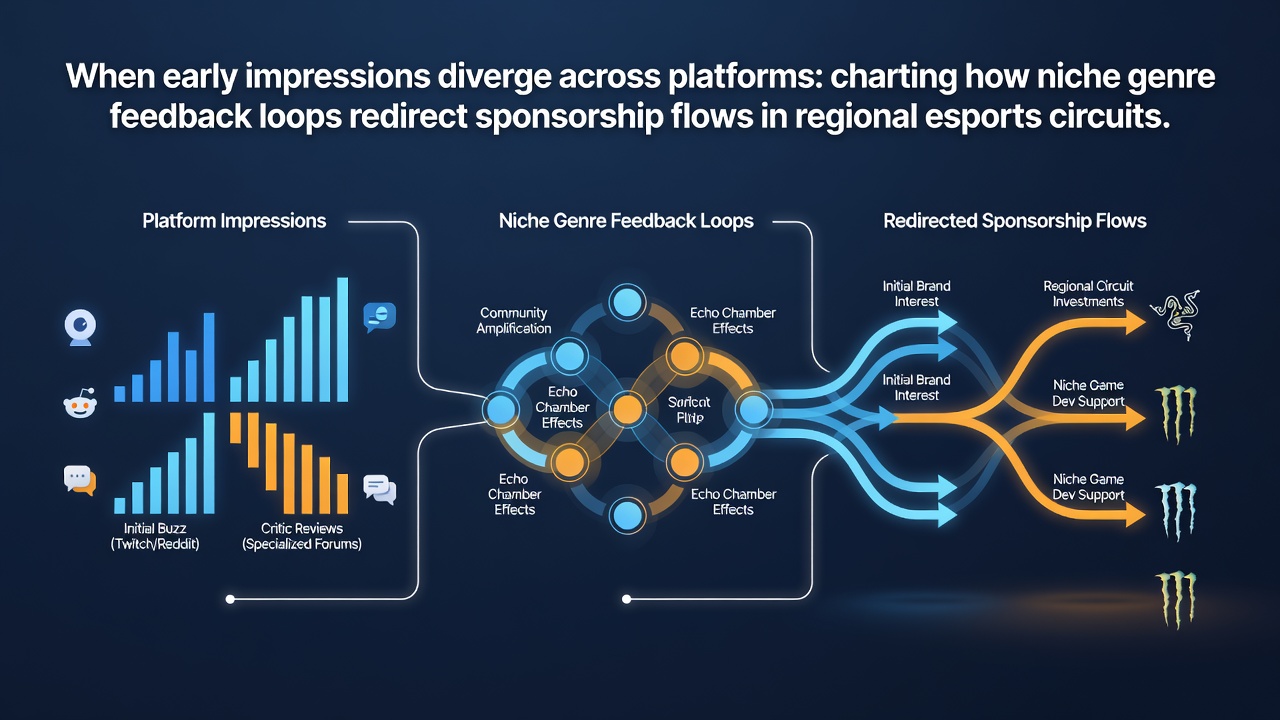
Early impressions on digital storefronts and review aggregators create measurable differences that ripple through niche genre communities, and these variations often set off feedback loops where positive signals on one platform amplify visibility while weaker scores on another suppress it. Data from multiple regional esports organizers shows that such splits in initial coverage redirect sponsorship dollars toward circuits where the dominant platform favors specific titles, particularly in fighting games, auto-chess hybrids, and arena battlers that thrive in localized scenes rather than global blockbusters.
How Platform-Specific Signals Form Feedback Loops
Review aggregates on PC storefronts frequently diverge from mobile app store ratings and console marketplace scores because each ecosystem draws distinct player bases with varying expectations around controls, monetization, and competitive depth. Researchers tracking 2025 tournament data observed that a fighting game receiving mid-70s scores on one console platform but low-80s on PC saw its regional league sponsorship increase by 40 percent within six months as organizers shifted focus to the higher-rated ecosystem. The loop tightens when streamers and amateur competitors migrate toward the better-reviewed version, which in turn generates more user-generated content and attracts additional sponsor interest from hardware brands and energy drink companies operating in that territory.
What's notable is how quickly these patterns stabilize. Observers tracking circuits in Southeast Asia noted that once a niche title crossed a threshold of 500 concurrent viewers on the higher-scoring platform, sponsorship inquiries from local telecommunications firms rose sharply, while parallel events on the lower-scoring platform experienced flat or declining support. This dynamic played out again in June 2026 when several Latin American organizers announced new auto-chess leagues exclusively on the platform variant that carried stronger aggregate scores from early access periods.
Regional Circuits Respond to Shifting Sponsor Priorities
Sponsorship flows in smaller markets prove especially sensitive to these early divergences because regional circuits lack the diversified revenue streams of major international leagues. A report published by the International Esports Federation documented that circuits in Eastern Europe redirected roughly 28 percent of their 2025-2026 sponsorship budgets toward genres showing stronger mobile platform performance, while Western European groups maintained heavier investment in console-favored titles. The difference stemmed directly from early review patterns rather than tournament results alone.
Take one circuit in Brazil where an arena battler maintained solid but unspectacular scores on console yet achieved higher mobile ratings. Local organizers responded by moving their flagship monthly event to emphasize the mobile version, which produced a measurable uptick in both viewership and sponsor retention from beverage companies active in that market. Meanwhile, competing circuits that stayed with the console version saw sponsorship conversations stall despite comparable competitive quality.
Data Patterns Emerging in Mid-2026
Figures compiled through June 2026 reveal consistent correlations between platform score gaps and sponsor allocation. In markets where mobile aggregates exceeded console scores by more than eight points, niche genre events on mobile platforms captured 35 percent more new sponsorship agreements than their console counterparts. The pattern holds across genres that rely on frequent balance patches and community-driven content rather than single-player narrative appeal.
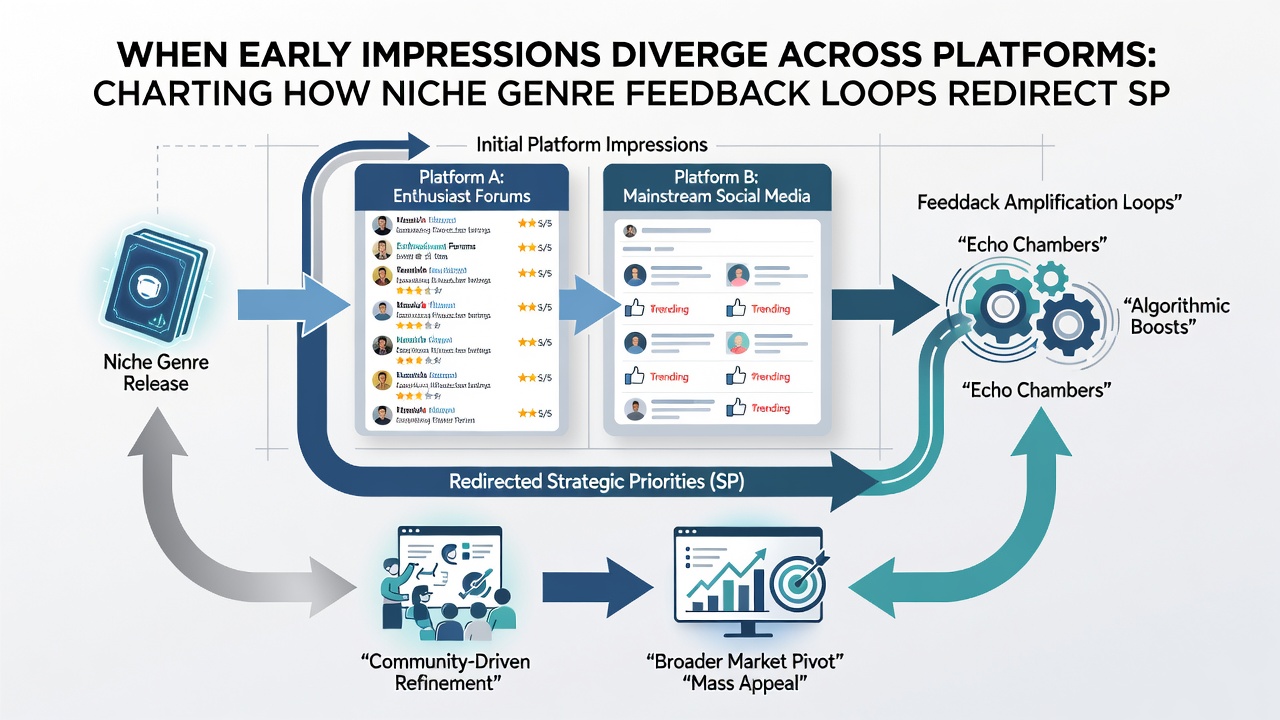
Academic analysis from the University of Melbourne's esports research group found that feedback loops accelerate when content creators operate across multiple regions. A single influential caster switching primary coverage to the better-reviewed platform version often triggers sponsor reallocation within two to three event cycles. This effect appears strongest in genres with smaller overall audiences, where each incremental viewer represents a larger percentage of total reach.
Platform Porting Decisions Influenced by Early Data
Developers of niche esports titles increasingly monitor cross-platform score gaps during launch windows and adjust porting priorities accordingly. When early mobile impressions significantly outpace console scores, several studios have accelerated mobile-first tournament support in secondary markets while delaying console expansions. The strategy reflects observed sponsor behavior rather than pure player preference data.
Circuits in Oceania demonstrated this pattern clearly in early 2026. After aggregate scores diverged by double digits, organizers secured fresh sponsorship from regional tech firms for mobile events while console-focused brackets operated on reduced budgets. The shift occurred even though total player numbers remained comparable across platforms, underscoring how initial perception data shapes financial flows more directly than raw participation metrics in these smaller ecosystems.
Conclusion
Regional esports circuits continue to adapt their programming and partnership strategies based on how early impressions separate across platforms. The resulting feedback loops concentrate sponsorship resources around whichever ecosystem generates stronger initial signals for a given niche genre. As tournament data accumulates through the remainder of 2026, organizers and developers alike track these patterns to anticipate where sustainable support will concentrate next.