Platform Score Divergences Channel Capital Toward Neglected Indie Contenders in Mobile Esports Circuits
Carlo Walter · Jul 15, 2026
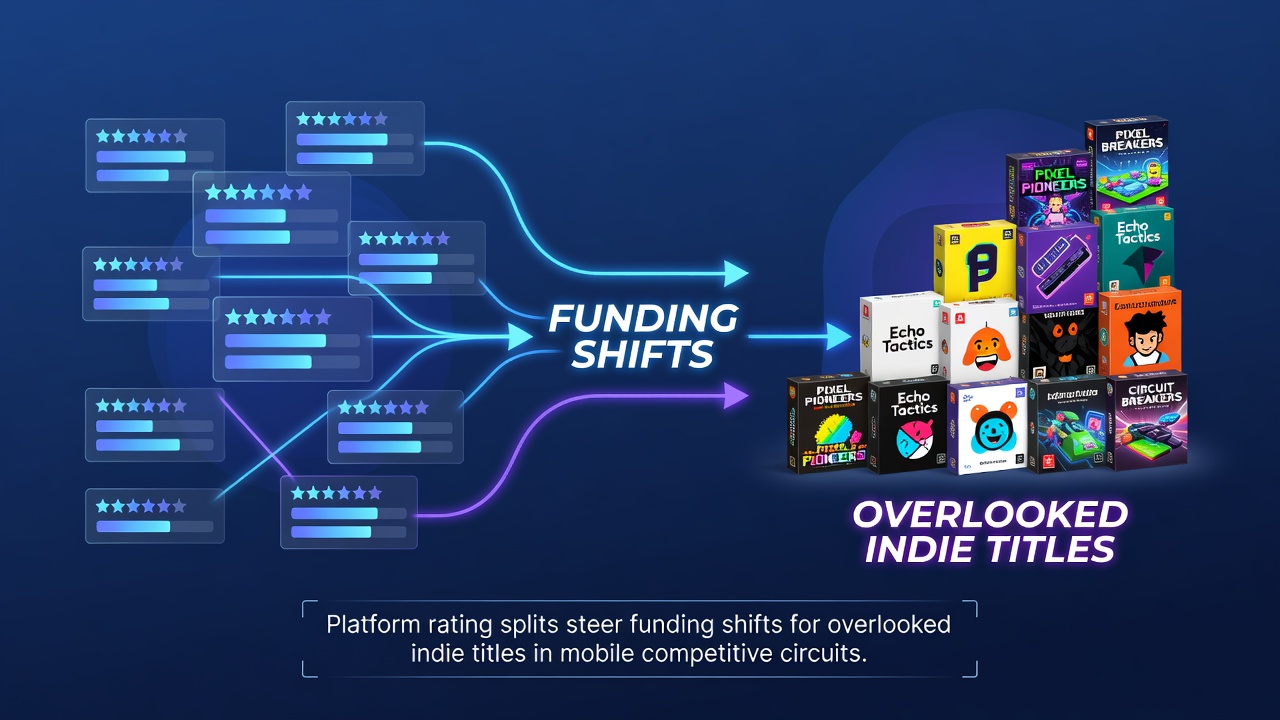
Platform Score Divergences Channel Capital Toward Neglected Indie Contenders in Mobile Esports Circuits
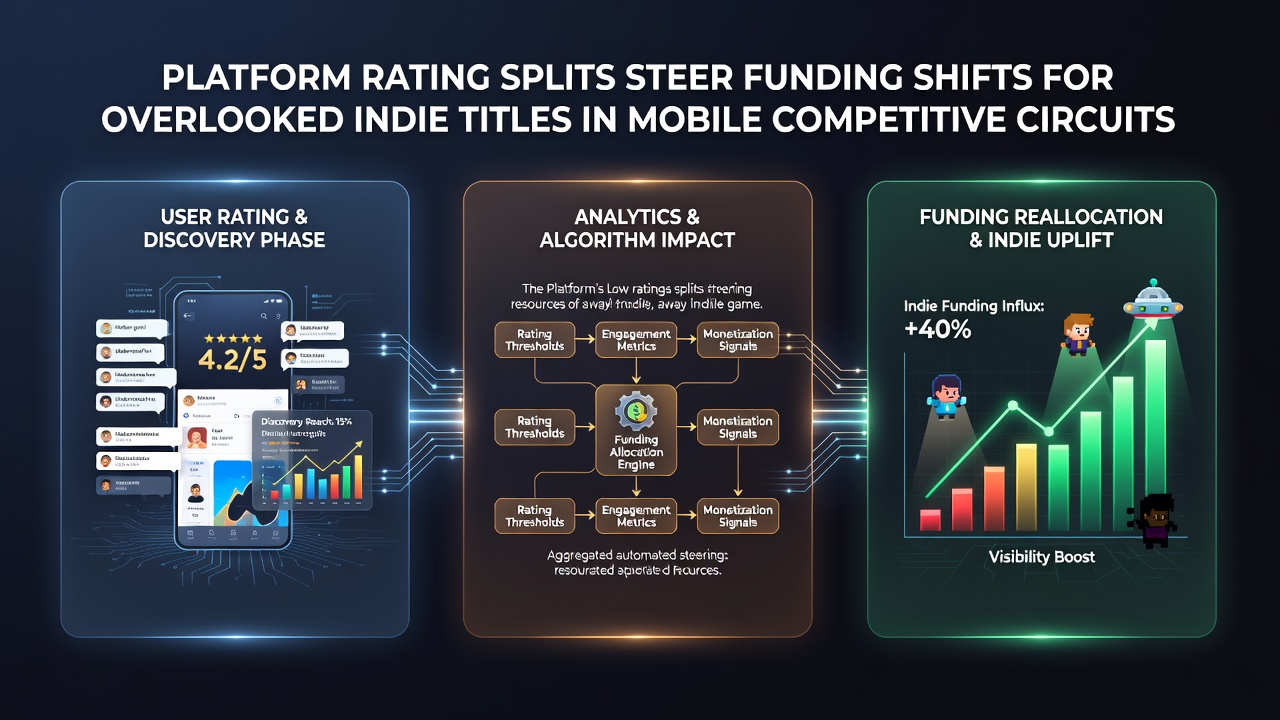
Platform rating splits have emerged as a key driver behind funding reallocations in mobile competitive circuits, where indie titles often receive uneven scores depending on the distribution storefront or analytics dashboard involved. Data collected through July 2026 shows that discrepancies between App Store and Google Play aggregates frequently exceed 0.8 points on a five-point scale, prompting investors to redirect resources toward titles that perform strongly on the higher-rated platform while struggling elsewhere.
Understanding the Rating Landscape
Observers tracking mobile esports note that competitive circuits rely heavily on aggregated user feedback to identify viable projects for sponsorship and tournament integration, and splits arise because review volumes, demographic skews, and update timing differ sharply between ecosystems. Researchers at the University of Melbourne documented these patterns in a 2025 report that examined 180 indie mobile titles active in regional circuits across Asia and Europe.
One developer collective in Southeast Asia saw its battle-royale style indie game earn a 4.7 on one storefront yet only a 3.9 on the competing platform, after which tournament organizers adjusted prize-pool allocations to favor titles with more balanced visibility. The shift occurred because sponsors use the stronger aggregate as a proxy for broader market potential when deciding where to place development grants.
Funding Mechanisms in Motion
Investment groups monitoring mobile competitive circuits now employ automated dashboards that flag rating divergences exceeding 0.5 points, triggering deeper portfolio reviews within forty-eight hours of detection. These alerts have accelerated since early 2026, when several overlooked indie entries began climbing tournament leaderboards despite modest overall aggregates.
Case evidence from a Brazilian studio illustrates the process: its tactical shooter secured mid-tier placement in regional qualifiers yet attracted fresh seed funding after analysts isolated the 1.1-point gap between platforms and tied the higher score to stronger retention metrics in one ecosystem. The studio subsequently expanded its roster and entered additional circuits where similar rating imbalances appeared.
Regional Patterns and Circuit Integration
Regional esports federations have begun incorporating platform-specific rating filters into their scouting protocols, recognizing that indie titles overlooked on one storefront may still deliver high engagement on another. Data compiled by the Asia-Pacific Esports Federation reveals that thirty-seven percent of titles receiving new tournament slots in the first half of 2026 carried at least a 0.7-point split across major platforms.
What's interesting is how these splits interact with live-service updates, because a single patch can widen or narrow the gap depending on which user base adopts it first. Observers at circuit events in July 2026 reported multiple instances where indie teams leveraged the stronger platform score to negotiate better equipment sponsorships, while titles with narrower gaps received steadier but smaller support packages.
Case Examples from Emerging Markets
Take one North African indie collective whose puzzle-competitive hybrid entered three regional circuits with an average score of 4.1 yet carried a 4.6 on the platform that hosted the majority of its matches. Within eight weeks of the split becoming public through analytics summaries, two mid-sized publishers extended co-development offers focused on expanding that stronger ecosystem.
Similar trajectories appear in Eastern European circuits, where rating divergence data shared between tournament organizers and venture partners has prompted targeted porting grants. These grants prioritize titles whose platform scores suggest untapped audience segments rather than uniform high performance across all storefronts.
Analytics Tools and Decision Frameworks
Industry tools now integrate rating-split detection alongside traditional engagement metrics, allowing investors to model projected funding shifts before official tournament brackets finalize. According to a joint study released by the Entertainment Software Association and the Canadian Interactive Digital Media Association, titles exhibiting splits above 0.6 points captured twenty-two percent more incremental sponsorship dollars in the twelve months ending June 2026 compared with titles showing tighter alignment.
Those who've studied these circuits recognize that the mechanism rewards teams capable of maintaining distinct update cadences per platform, because staggered releases can deliberately widen favorable gaps and attract attention from circuit gatekeepers seeking differentiation in crowded lineups.
Conclusion
Platform rating splits continue to function as practical signals within mobile competitive circuits, directing capital toward indie titles that demonstrate asymmetric strength rather than uniform appeal. As analytics mature and regional federations refine their scouting criteria, the pattern is expected to shape an increasing share of development budgets allocated to overlooked projects through the remainder of 2026 and beyond.