Regional Score Gaps in Mobile Esports Titles Steer Targeted Console Port Investments in Overlooked Genres
Casey Coleman · Jun 10, 2026
Regional Score Gaps in Mobile Esports Titles Steer Targeted Console Port Investments in Overlooked Genres
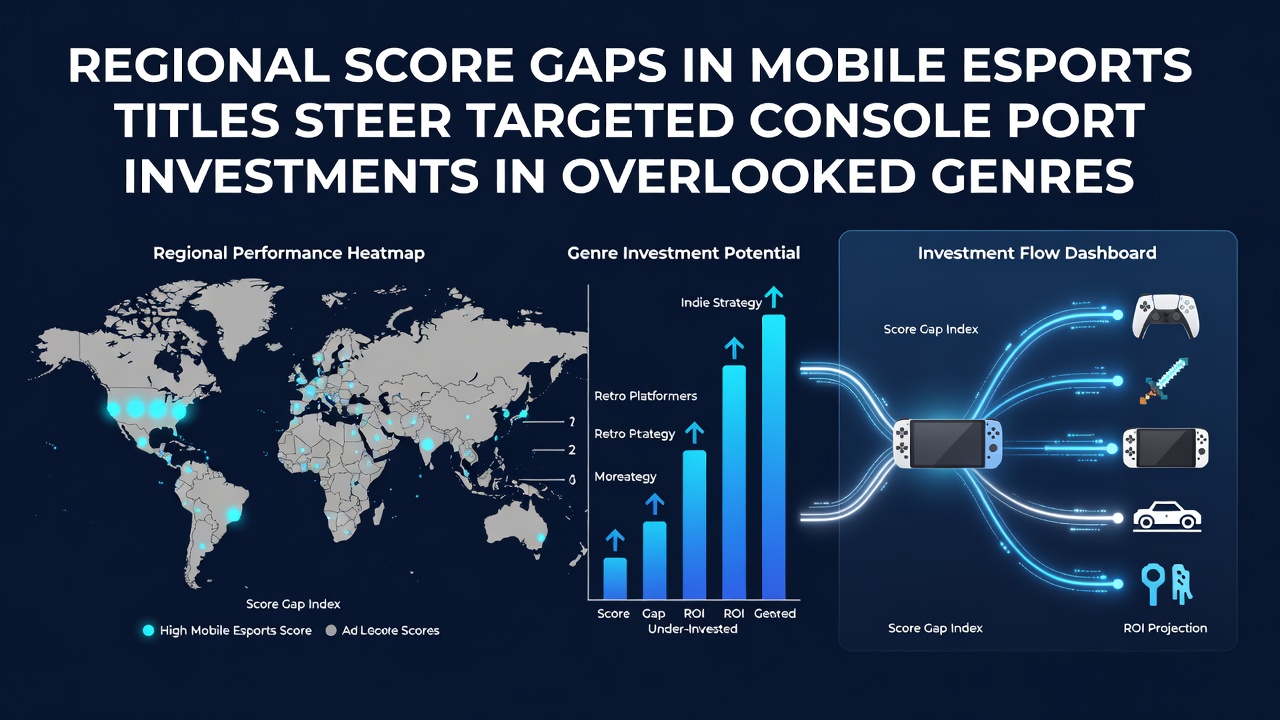
Data from multiple tracking platforms indicates that score disparities between regions in mobile esports competitions have begun influencing how publishers allocate resources for console adaptations; developers examine these patterns to identify genres that receive less attention on traditional platforms yet show strong engagement metrics in specific territories. Observers note that titles performing unevenly across Asia, Europe, and North America often reveal untapped potential when ported to consoles, where hardware capabilities allow for expanded features in strategy or simulation categories that mobile constraints previously limited.
Patterns in Performance Metrics Across Markets
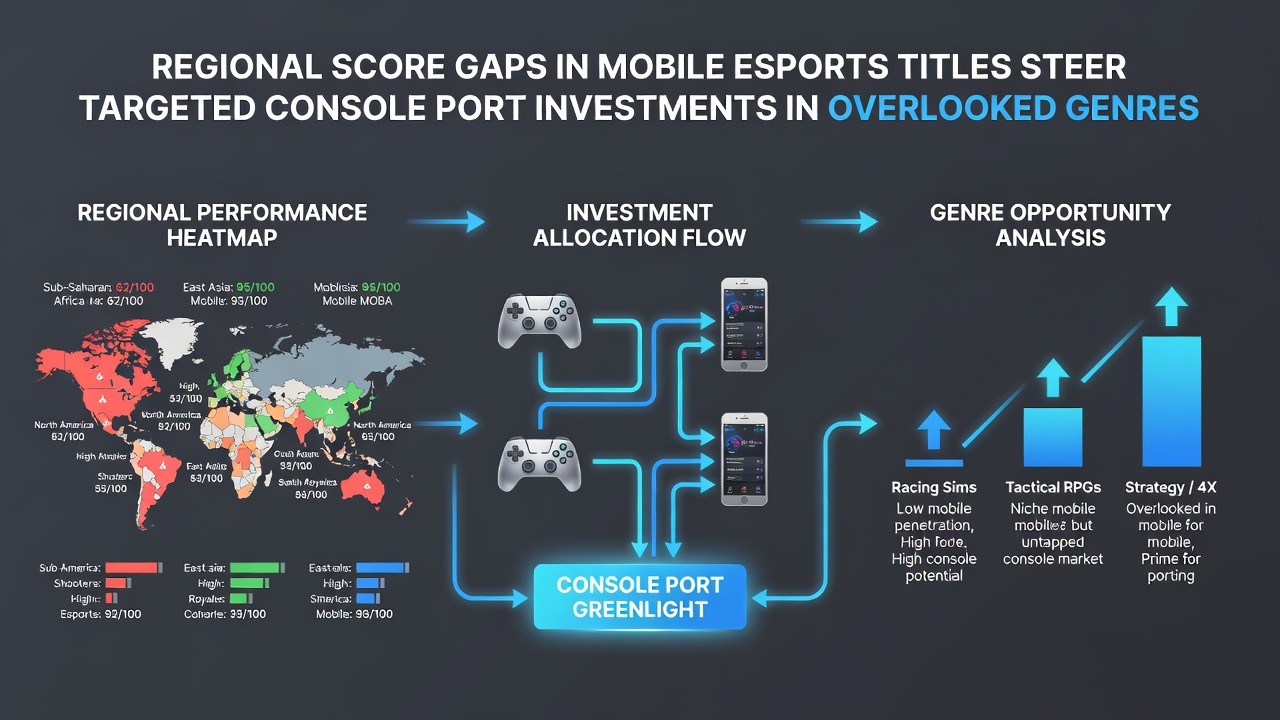
Research from industry groups shows that mobile esports games frequently post higher average scores in Southeast Asian markets compared to Western regions, particularly in real-time strategy and card-based battle formats; this divergence prompts studios to reassess which genres might benefit from console releases where controller inputs and larger screens enhance competitive depth. Figures released in early 2026 highlight how certain overlooked genres, such as turn-based tactics, maintain consistent player retention in mobile formats but lack equivalent console counterparts, leading firms to target ports that address these gaps directly.
Investment Shifts Toward Niche Categories
Companies tracking these regional variations direct funding toward console versions of mobile esports titles in genres like puzzle battles and management simulations; data compiled by trade associations reveals that such moves often follow analysis of score clusters, where lower performance in one area signals opportunities for differentiated experiences on home systems. Analysts at organizations like the Entertainment Software Association have documented how these decisions correlate with broader platform strategies, since console ecosystems support deeper community tools and cross-play options that mobile setups sometimes restrict.
What's interesting is how publishers use these insights to prioritize development pipelines, since a game struggling in North American mobile rankings might excel when adapted for European console audiences with adjusted balance mechanics. External reports from bodies including the Interactive Games and Entertainment Association in Australia further illustrate that regional score gaps accelerate port timelines for genres previously sidelined due to perceived market saturation in mainstream categories.
Examples of Targeted Port Strategies
Take one developer collective that examined leaderboard data from mobile tournaments spanning multiple continents; they identified a gap in simulation esports where Asian players outperformed others by wide margins, prompting investment in a console edition that incorporated advanced physics modeling unavailable on phones. Studies conducted by university research teams indicate that such adaptations often result in expanded player bases, as console hardware facilitates tournaments with reduced latency and improved spectator modes that appeal to overlooked demographics.
By June 2026, several mid-sized studios had announced console ports for mobile-originated genres including deck-building competitions and territorial control games; these announcements followed internal reviews of score distributions that flagged underperformance in certain regions as a cue for hardware-specific enhancements. Industry observers point out that this approach contrasts with earlier uniform porting practices, since current methods emphasize data-driven selection of titles likely to close competitive imbalances through platform advantages.
Broader Industry Implications
Trade data suggests that console investments guided by mobile esports analytics contribute to diversification in game libraries, particularly for genres like tactical role-playing that historically received limited attention outside mobile circuits. Partnerships between mobile developers and console manufacturers have increased as a result, with agreements focusing on shared analytics platforms that track performance shifts post-port. According to findings from European gaming federations, these collaborations help address market fragmentation by aligning regional strengths with hardware capabilities that support more complex rule sets and larger-scale matches.
Yet the process involves careful calibration, since rapid port decisions based solely on score gaps can overlook cultural preferences that influence long-term adoption. Research indicates that successful cases often combine regional metrics with user behavior studies to refine control schemes and progression systems before launch.
Conclusion
Regional score variations in mobile esports continue shaping console port priorities for genres that previously lacked dedicated development focus; ongoing data collection from diverse markets supports more precise investment choices that expand competitive options across platforms. As tracking methods evolve, the connections between mobile performance patterns and console strategies are expected to strengthen, offering pathways for genres that benefit from hardware transitions.