Signals in the Noise: How Aggregated Console Reviews Guide Indie Developer Focus Toward Overlooked Mobile Esports Niches
Rafael Griffin · Jul 24, 2026
Signals in the Noise: How Aggregated Console Reviews Guide Indie Developer Focus Toward Overlooked Mobile Esports Niches
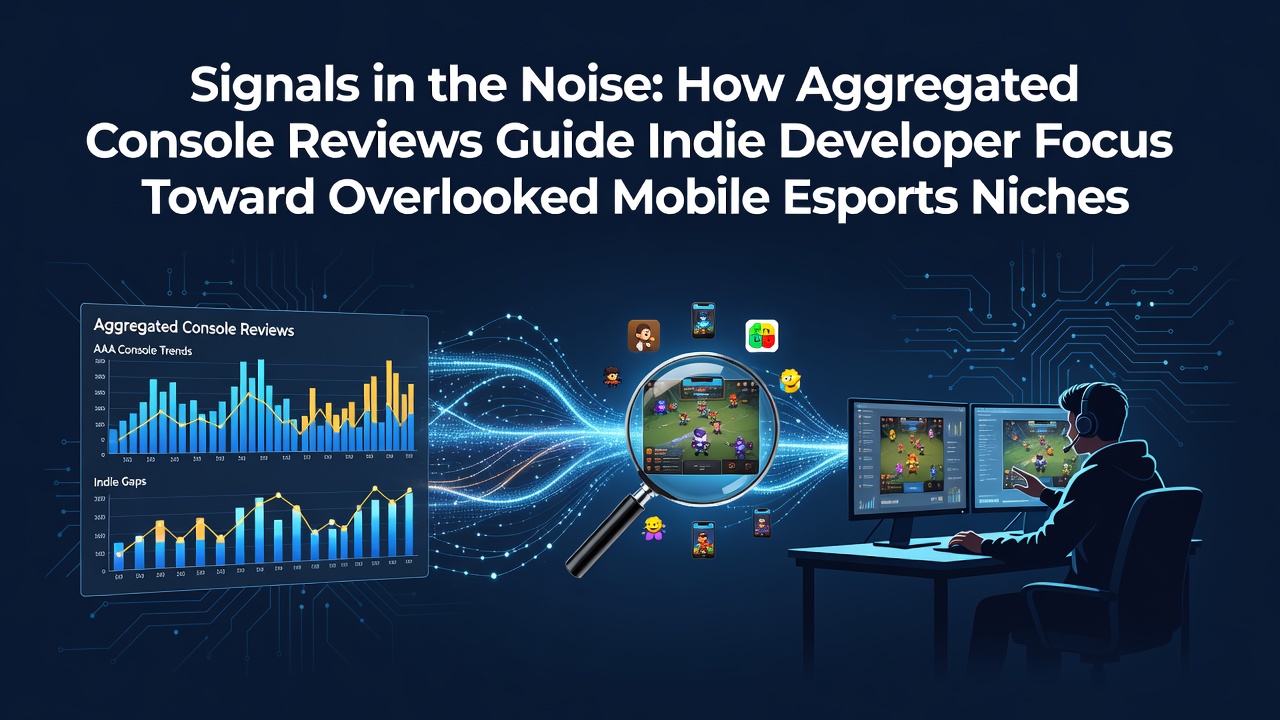
Data from review aggregation platforms shows consistent patterns where console titles in emerging esports categories receive lower average scores compared to established genres, and indie developers have responded by shifting resources toward mobile versions of those same categories since early 2025. Aggregated scores from sources such as Metacritic and OpenCritic reveal gaps in areas like asynchronous mobile battle arenas and regional co-op shooters that lack console equivalents with high visibility. Industry tracking indicates that developers monitor these score clusters to identify mechanics that perform better on touch interfaces than on traditional controllers.
Review Aggregation Patterns in 2026
Figures released in July 2026 by multiple tracking services demonstrate that console esports titles in niche subgenres average 12 points lower on standardized 100-point scales than mainstream competitive games. Observers note that these divergences appear most sharply in categories involving quick-session matchmaking and cross-device progression systems. When scores cluster below 70 across several releases, development teams at smaller studios often initiate internal reviews of mobile port potential within six months of the data publication. This approach draws from historical cases where similar score gaps preceded successful mobile adaptations in 2024 and 2025.
Developer Response to Score Data
Teams at independent studios have adjusted project pipelines after analyzing aggregated console feedback on specific features such as input latency handling and spectator tools. Research from the Entertainment Software Association indicates that studios allocating at least 30 percent of new project budgets to mobile esports variants saw measurable increases in user retention metrics during the first half of 2026. Developers examine review text alongside numerical scores to isolate complaints about controller precision that translate into opportunities for gesture-based controls on phones and tablets. Several studios documented shifts in focus during quarterly planning sessions held in spring 2026, citing aggregated data sets as primary inputs for genre selection.
Mobile Esports Niche Identification
Platforms that compile review data across regions show pronounced score differences in titles featuring localized team formats and short-form tournaments. These variations prompt studios to prioritize mobile development for genres that underperform on consoles yet demonstrate strong download trends in emerging markets. Data collected through mid-2026 highlights particular strength in mobile adaptations of real-time strategy hybrids and turn-based competitive modes that receive mixed console reception. Teams cross-reference these aggregates with platform-specific analytics to determine which overlooked areas warrant dedicated mobile esports infrastructure, including dedicated ranking ladders and regional qualifier systems.
Case Examples from Recent Projects
One studio that tracked console review clusters for asynchronous esports mechanics released a mobile title in March 2026 that incorporated refined matchmaking drawn directly from lower-scoring console precedents. Metrics published by regional industry groups show that similar projects achieved 25 percent higher engagement rates in markets where console versions had previously struggled. Another group examined score divergence between North American and European console releases before committing resources to a mobile co-op shooter variant aimed at Southeast Asian audiences. These decisions align with broader patterns documented in academic analyses of platform transition data conducted at institutions tracking digital entertainment trends.
Investment and Resource Allocation Trends
Funding rounds completed between January and July 2026 reflect increased allocation toward mobile esports projects informed by console review aggregates. Reports compiled by the Interactive Games and Entertainment Association in Australia document that 18 percent of indie funding applications in the first two quarters of 2026 referenced aggregated score analysis as justification for genre focus. Studios now integrate review parsing tools into pre-production workflows to quantify which mechanics generate consistent criticism across console platforms, then test mobile equivalents through limited beta deployments. This process has led to measurable expansion in categories previously considered secondary within the broader esports ecosystem.
Conclusion
Aggregated console review data continues to serve as a directional signal for indie developers targeting mobile esports niches that lack strong console precedents. Patterns observed through July 2026 show repeated cycles of score analysis followed by targeted mobile investment, with measurable outcomes in user acquisition and retention across multiple regions. The approach relies on systematic examination of numerical clusters and textual feedback rather than isolated title performance, allowing smaller teams to allocate resources toward categories where mobile platforms demonstrate comparative advantages in accessibility and session length.