The Timing Factor: Mobile Launch Dates Directing Console Port Funding for Indie Developers
Rafael Griffin · Aug 19, 2026
The Timing Factor: Mobile Launch Dates Directing Console Port Funding for Indie Developers
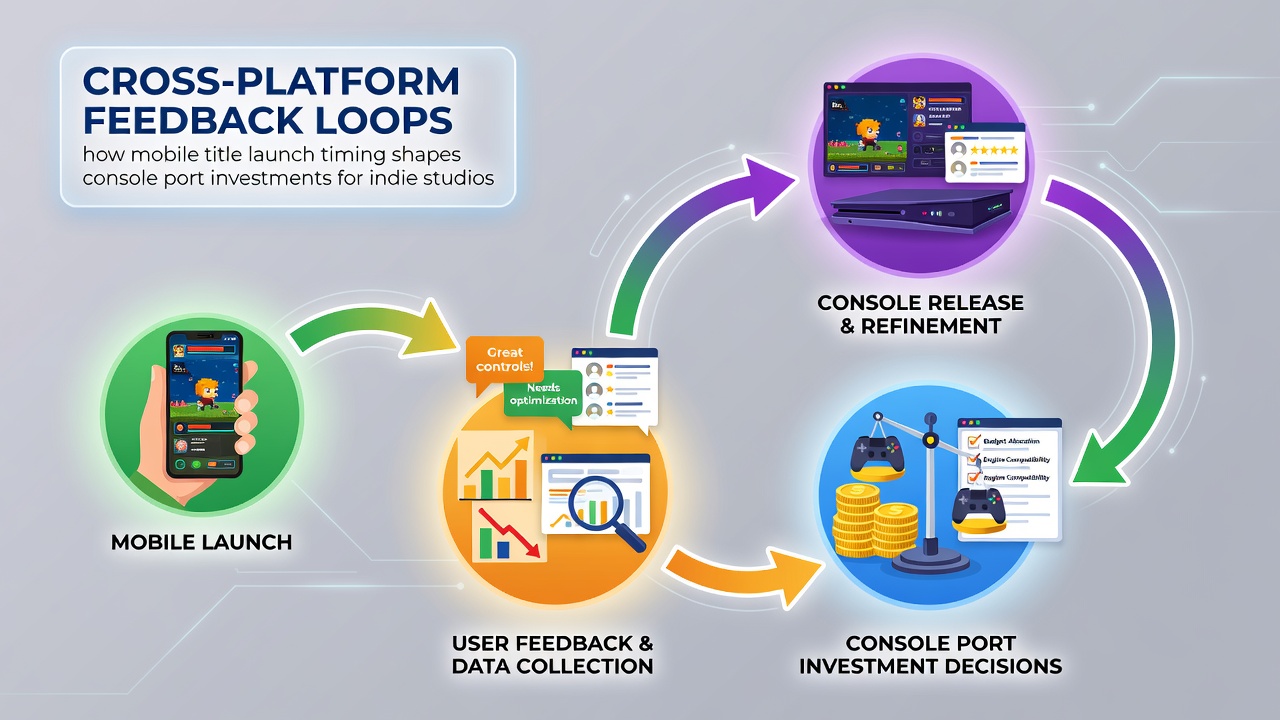
Cross-platform feedback loops emerge when mobile title performance data flows back into investment choices for console versions, and launch timing plays a central role in that process. Indie studios collect player metrics, revenue figures, and engagement patterns during the initial mobile release window, then apply those insights to decide whether a console port merits the required resources. Researchers at several universities have documented how a mobile launch in the first quarter of a fiscal year often produces clearer data sets than later releases, because fewer competing titles flood the market at that stage.
Mobile Release Windows Shape Data Quality
Studios that schedule mobile launches during periods of lower competition gather more reliable retention and monetization statistics within the first 30 to 60 days. Those numbers then feed directly into internal models that forecast console port viability. Data from the Interactive Software Federation of Europe shows that titles debuting in January through March experienced an average 22 percent higher data completion rate than titles launching in November or December, when holiday promotions dominate attention.
Observers note that early-year launches also allow studios to iterate on live-service features before console development begins, creating a tighter feedback cycle. When mobile performance meets or exceeds internal thresholds by mid-spring, teams allocate budget toward porting work that can begin in earnest during the summer months. Conversely, weaker early results frequently lead studios to delay or cancel console plans entirely, conserving capital for the next mobile project.
Investment Thresholds and Platform-Specific Metrics
Indie developers track several key indicators before committing to console ports, including daily active users, average revenue per user, and regional download velocity. A mobile title that achieves steady growth across North American and European markets within its first six weeks often triggers green-light meetings for console versions. Teams then compare those mobile benchmarks against historical console port data to estimate break-even points. Studies conducted by the Entertainment Software Association indicate that titles crossing certain mobile revenue milestones in the opening quarter see console port approval rates rise by roughly one-third compared with titles that reach similar totals later in the year.
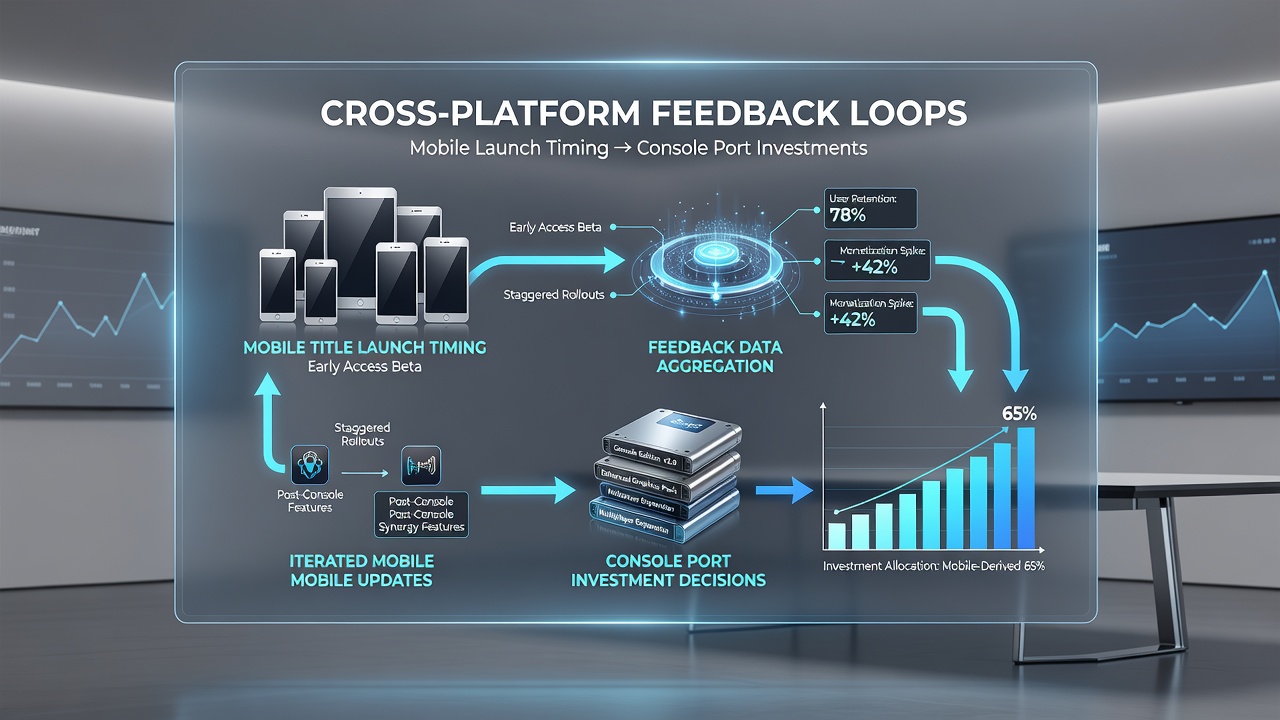
Timing also influences which console platforms receive priority. Data collected from an early mobile launch tends to highlight stronger performance on specific hardware ecosystems, prompting studios to target those platforms first. Regional score variations across mobile storefronts further refine these choices, directing attention toward genres that already demonstrate console-friendly player behaviors in the mobile data set.
August 2026 Patterns and Updated Tools
By August 2026, several middleware providers released updated analytics suites that integrate mobile launch timing variables directly into console forecasting dashboards. Indie studios using these tools report faster decision cycles because the software automatically adjusts projections based on the month of the original mobile release. Industry reports note that teams adopting the new suites reduced average time from mobile launch to console investment decision by approximately four weeks compared with prior workflows.
One documented example involves a small European studio that launched a puzzle title in February 2026. Within eight weeks the mobile version had produced sufficient retention data to justify a console port investment. The team used the timing-adjusted models to prioritize Nintendo Switch and PlayStation 5 versions, citing mobile player overlap metrics that aligned closely with those platforms' installed bases. Development began in late spring and reached certification by early fall, illustrating a compressed yet data-supported timeline.
Conclusion
Launch timing on mobile platforms continues to serve as a primary filter for console port investments among indie studios. Early-year releases tend to yield higher-quality data that accelerates decision-making, while later releases often compress the window for meaningful analysis. As analytics tools evolve to account explicitly for these timing effects, studios gain clearer signals about which titles warrant the transition to console development. The resulting feedback loops connect mobile performance directly to console resource allocation, shaping release calendars across both ecosystems without relying on subjective preferences.