Tracing How Review Cluster Patterns Across Platforms Reveal Emerging Niches for Indie Esports Expansions
Klara Long · Jul 17, 2026
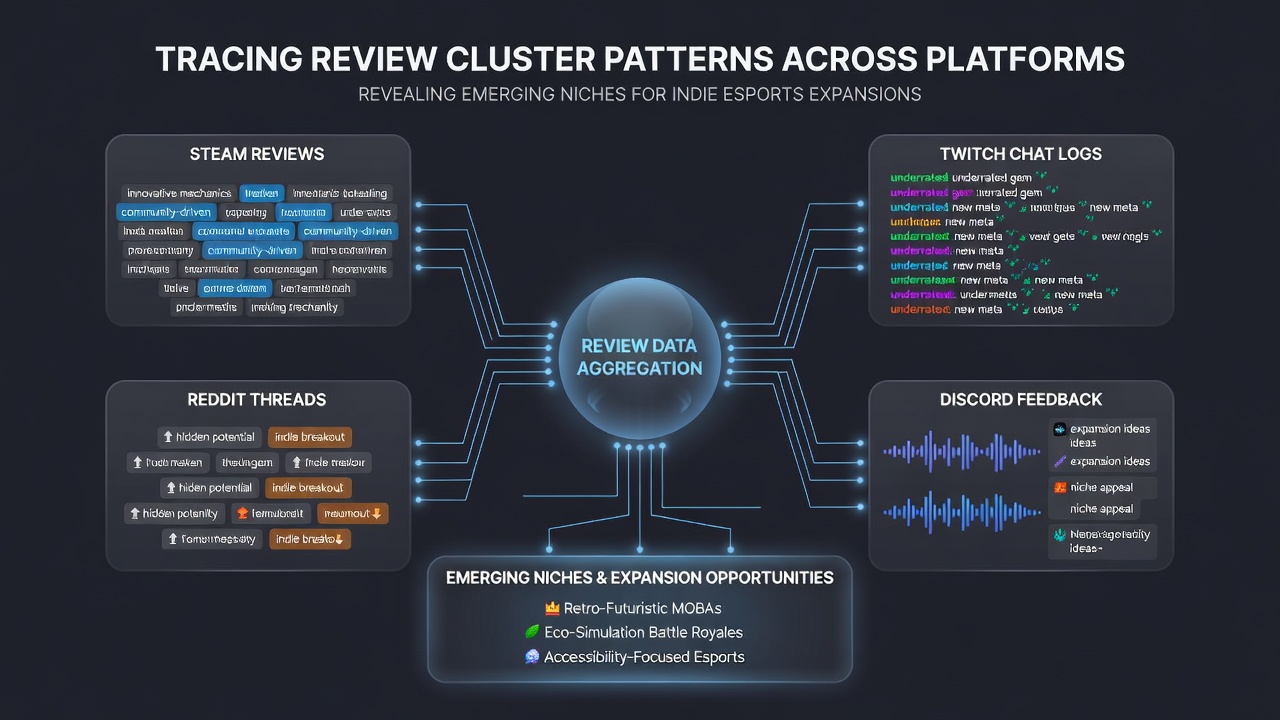
Tracing How Review Cluster Patterns Across Platforms Reveal Emerging Niches for Indie Esports Expansions
Review clusters form when user ratings and written feedback group together around shared themes such as mechanics, community features, and competitive balance, and analysts track these groupings across storefronts including Steam, mobile marketplaces, and console networks to identify where indie developers might expand esports offerings. Data collected through July 2026 shows distinct groupings in player commentary that highlight underserved genres like tactical card battlers and asymmetric arena fighters, with clusters appearing more densely on mobile platforms than on traditional consoles. Analysts segment reviews by keywords related to multiplayer longevity, skill expression, and cross-play support, then map the resulting clusters onto platform-specific datasets. Mobile titles generate higher volumes of short-form feedback that emphasizes quick-match accessibility, whereas console reviews tend to cluster around deeper progression systems and tournament integration. This divergence creates visible patterns where certain subgenres receive concentrated praise on one platform yet remain sparse on others, guiding expansion decisions without requiring large-scale original market research.Platform-Specific Cluster Formation
Steam reviews often group around modding potential and spectator tools, creating tight clusters that point toward niche esports formats built on user-generated content. Mobile store feedback, by contrast, clusters around session length and device performance, revealing opportunities for simplified competitive modes that still support ranked ladders. Console network data tends to emphasize controller precision and local multiplayer, forming separate groupings that indie teams can reference when planning multi-platform releases.
Those patterns become clearer when analysts compare review density across regions. Titles that attract positive clusters in Southeast Asian mobile markets frequently show thinner groupings in North American console feedback, indicating room for targeted porting efforts that address hardware-specific expectations. Researchers at the Entertainment Software Association have documented similar regional variations in their annual reports, noting how feedback clusters shift based on available input methods and social features.Identifying Emerging Niches Through Cluster Analysis
Review clusters frequently surface around hybrid genres that blend established esports elements with indie twists, such as turn-based strategy games incorporating real-time spectator voting. In July 2026, aggregated data from multiple storefronts indicated rising cluster strength in these areas, particularly where players praised seamless integration between single-player campaigns and online tournaments. The groupings appear first on mobile due to higher iteration speed, then migrate toward console platforms as developers refine controller mappings.
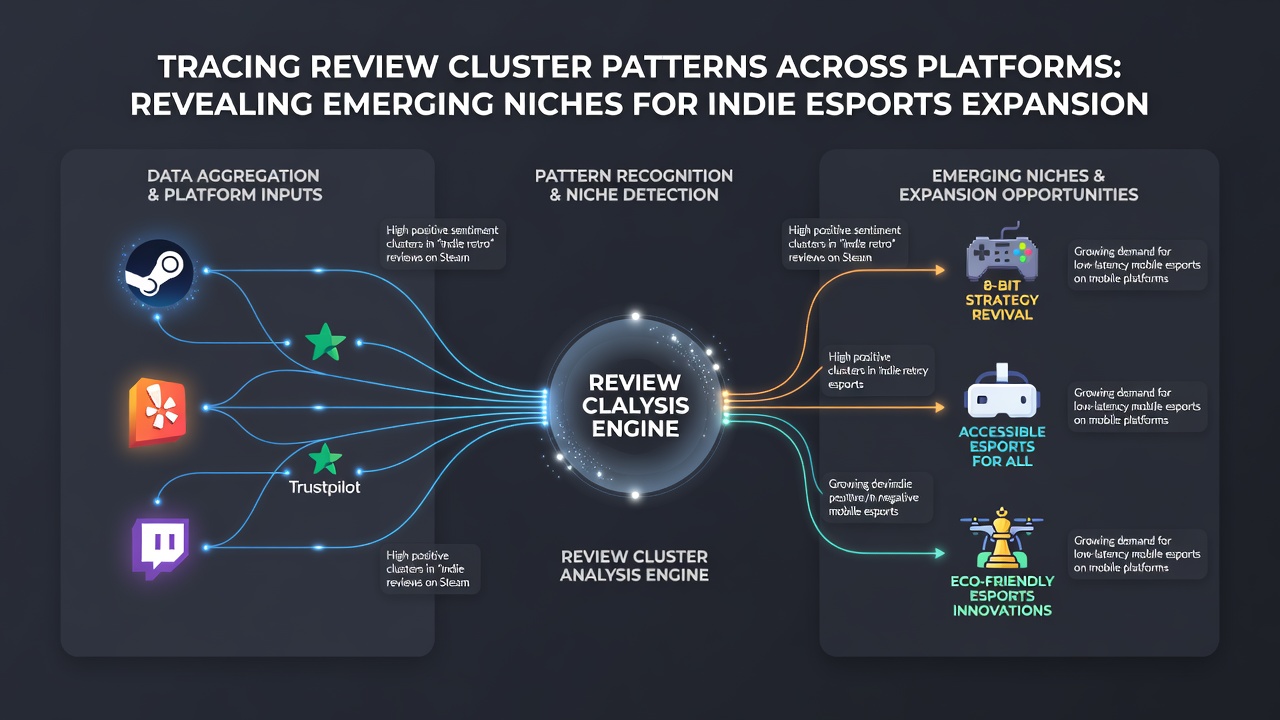 One study from the University of Alberta tracked how clusters around accessibility options predicted successful expansion into new esports verticals, showing that titles with strong positive groupings in mobile reviews later performed well after console ports when developers addressed the feedback themes. Such observations help teams prioritize features like adjustable match pacing or spectator overlays that appear repeatedly in the data.
Expansion Strategies Informed by Cluster Insights
Indie studios use cluster mapping to decide which platforms to prioritize during early expansion phases. When mobile reviews form dense clusters around bite-sized competitive sessions, developers often accelerate console releases that emphasize those same short-form matches while adding local co-op elements demanded by console reviewers. This approach reduces the risk of mismatched expectations across storefronts.
Figures from industry monitoring services indicate that titles following cluster-guided expansion paths achieve faster community growth in secondary markets. Analysts note consistent correlations between early review groupings and later tournament participation rates, particularly in genres that previously lacked dedicated indie support. The patterns also highlight where cross-platform features such as unified leaderboards can strengthen cluster cohesion and encourage sustained player engagement.Conclusion
Review cluster patterns across platforms continue to provide measurable signals for indie esports expansions by revealing where player feedback converges on specific mechanics and formats. Data through July 2026 demonstrates that tracking these groupings allows developers to identify viable niches before committing resources to full multi-platform campaigns. The approach relies on existing review corpora rather than new surveys, offering a practical method for aligning development priorities with documented player interests across storefronts and regions.